
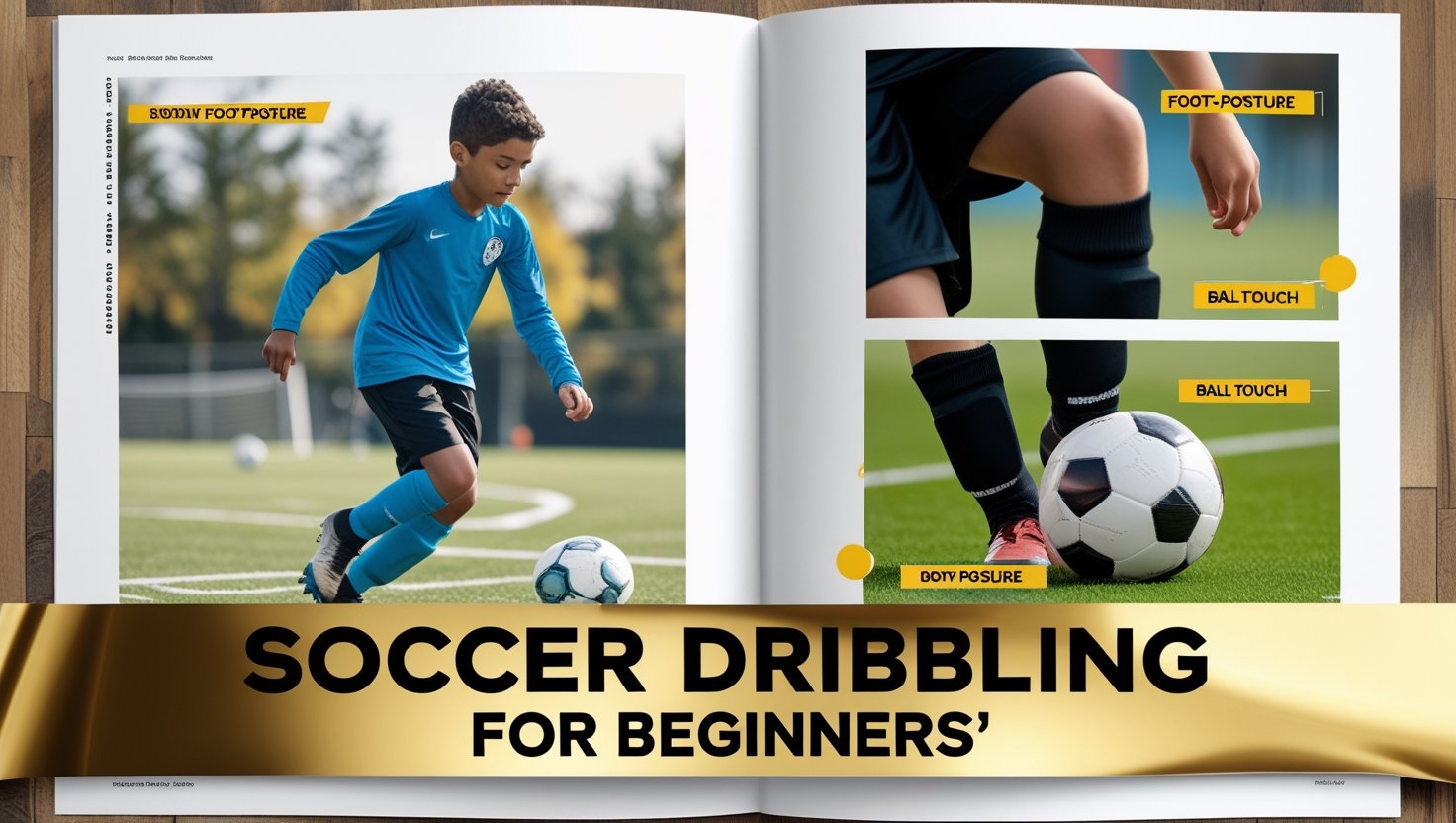
Imagine weaving past defenders with the graceful assurance of a seasoned pro, even when you’re just starting out. Soccer dribbling is more than a technique, it’s the heart of the game, the art of controlling the ball as if it were part of you. For beginners, mastering the fundamentals of dribbling is the key to unlocking creativity, boosting confidence, and setting the stage for success on the field. In this article, we’ll break down simple skills, essential drills, and practical tips that will turn novice moves into fluid, game-changing maneuvers.
The Game Begins: Why Soccer Dribbling Matters:
At its core, soccer is a dance between precision and passion, where the ability to keep close control of the ball can make all the difference. Soccer dribbling is arguably the most important skill a player can develop because it serves as the gateway to fluid gameplay and tactical innovation. When you dribble effectively, you not only move past opponents but also create opportunities for scoring and setting up teammates with crisp passes. Unlike other aspects of the game that rely on raw speed or strength, dribbling is about finesse and creativity, qualities that can elevate your entire performance regardless of your position on the field.
For a beginner, learning to dribble well creates a solid foundation for building other skills. It teaches body control, strengthens decision-making, and hones spatial awareness on a crowded pitch. With dedicated practice, you learn how slight touches and quick changes in direction can transform you from a hesitant newcomer into a dynamic force with the ball. Embracing soccer dribbling early on means setting the stage for a more confident, expressive style of play that can adapt to any challenge on the field.
Building Unshakeable Foundations:
Successful dribbling starts with solid fundamentals. The first step is mastering your footwork and learning how to control the ball with both the inside and outside of your foot. For beginners, this means starting slowly and focusing on clean, consistent touches. Your dominant foot might feel more natural at first, but developing proficiency with your non-dominant foot is crucial to becoming unpredictable on the pitch.
Think of this phase as learning the alphabet of your soccer vocabulary. Simple exercises like dribbling through a line of cones or simply moving the ball between your feet in a stationary position can work wonders. Maintaining a low center of gravity, with your knees slightly bent and your body balanced, is essential for quick turns and sudden bursts of speed. This foundational control not only prevents you from losing the ball under pressure but also builds muscle memory that forms the basis of more advanced techniques later on.
During this stage, it’s important to keep your eyes on the ball while gradually learning to scan your surroundings. Over time, as you become more comfortable with that constant back-and-forth of focus, you’ll find yourself naturally lifting your head to check for defenders or teammates. By establishing these robust fundamentals, you set the stage for a dribbling style that is both efficient and adaptable, ensuring that every touch counts toward making you a better player.
Feel the Rhythm:
Dribbling in soccer isn’t just about moving the ball; it’s about creating a harmonious rhythm between your body and the ball. As you progress, you’ll begin to appreciate that dribbling is as much an art as it is a skill. Developing coordination and balance enables you to maneuver smoothly, even when under pressure. When the ball feels like an extension of yourself, you can change pace, shift direction, or accelerate in an instant, keeping the defender off balance.
To build this rhythm, start by practicing with smaller, quicker touches. Focus on using both the inside and outside of your feet in unison with your body’s natural movements. For example, a simple drill involves gently tapping the ball forward and then quickly pulling it back under control while keeping your body aligned. This helps in creating a seamless connection with the ball. Remember, the goal isn’t to rush through the drill but to maintain fluidity in your movements. Consistent repetition of these techniques leads to improved timing and balance, which ultimately translates into more confident moves during gameplay.
Additionally, incorporating slight changes in direction and speed during drills can help simulate real-game scenarios. As your muscle memory and spatial perception develop, you’ll anticipate defenders’ movements and react more instinctively. Over time, dribbling becomes less about the conscious effort of controlling the ball and more about letting your instincts guide your actions, a subtle shift that can dramatically enhance your overall performance on the field.
Looking Up: Cultivating Field Awareness While Dribbling:
One of the hardest lessons for beginners is learning to lift your head and scan the field while maintaining ball control. Soccer dribbling isn’t just about technical prowess; it’s also about smart decision-making and situational awareness. When you keep your eyes on the ball at all times, you miss the broader picture, opportunities to outsmart defenders, pass to an open teammate, or even make a decisive move toward the goal.
Cultivating field awareness starts with simple adjustments during practice. Try dribbling in an open space where you can periodically glance around without risking an opponent’s challenge. Gradually, push yourself to shorten the time your eyes spend on the ball, relying more on your developed touch and intuition to keep the ball close. This dual focus enables you to anticipate threats and opportunities simultaneously. Knowing where defenders are, understanding their body language, and identifying gaps in the opposition’s formation empowers you to make quick, effective decisions on the move.
Furthermore, advanced dribbling is less about isolated ball control and more about how that control serves a broader tactical purpose. By developing a habit of watching the field, you’re not only improving your individual skill set, but you’re also contributing to team play. This heightened awareness can become a game-changer, turning what might seem like a routine dribble into a strategic play that disrupts defenses and creates scoring opportunities.
Practice With Purpose:
Practice makes perfect, and the secret lies in practicing with purpose. For beginners, the road to mastering soccer dribbling is paved with focused, fun drills that emphasize both technique and creativity. One highly effective drill is the “cone weave,” where you set up a series of cones in a zigzag pattern and dribble through them using gentle, controlled touches. This drill not only improves your close control but also forces you to adapt your dribbling to tight spaces, an essential skill when facing determined opponents.
Another excellent drill is the “figure eight,” which involves dribbling in a continuous looping pattern around two closely spaced objects, simulating defenders. This exercise enhances your ability to change direction quickly while keeping the ball secure. For those looking to stretch their skills even further, try a “mirror drill” with a partner. In this drill, one player leads with various dribbling moves, while the partner mimics them as best as possible, fostering both creativity and adaptability.
Incorporating these drills into your daily training sessions builds the muscle memory required for effective dribbling. Over time, you’ll notice that the movements become second nature, allowing you to focus on more advanced techniques and decision-making under pressure. Whether you’re practicing alone or with friends, make each drill count by remaining focused and seeking incremental improvement. With consistent, purposeful practice, you’ll transform those simple motions into a confident display of skill on the field.
From Training to Triumph:
The ultimate goal of honing your dribbling skills is to bring them into real game experiences with confidence and creativity. Transitioning from isolated drills to dynamic game situations requires you to integrate all that you’ve learned about ball control, coordination, and field awareness. Start by gradually testing your skills in small-sided games or practice scrimmages where the pressure is lower, and mistakes are seen as stepping stones rather than setbacks.
In these game-like situations, focus on making quick decisions about when to dribble, pass, or take on a defender. As you gain experience, you’ll learn to recognize which moments call for a burst of speed or a clever change in direction. The key is to remain calm and trust in the habits you’ve developed through regular practice. By consistently applying your soccer dribbling techniques under pressure, you begin to see noticeable improvements in your overall game.
Coaches often emphasize that the beauty of dribbling lies not in showy tricks but in the efficiency and intelligence behind each move. As you progress, challenge yourself by gradually increasing the intensity of your practice sessions, adding more defenders, reducing space, or setting time limits for decision-making. Each of these adjustments helps simulate the unpredictable nature of a real match and sharpens your instincts. Ultimately, integrating simple dribbling skills into your gameplay builds both your technical prowess and your tactical acumen, paving the way for more consistent success on the pitch.
Conclusion:
Mastering soccer dribbling for beginners isn’t about flashy moves; it’s about building a solid foundation of control, balance, and awareness that transforms every touch into an opportunity. By focusing on basic footwork, developing a natural rhythm with the ball, and training your eyes to see the whole field, you’ll soon discover that dribbling is not just a skill but a powerful tool for success on the pitch. Embrace the simple drills, practice with purpose, and integrate what you learn into every game, knowing that each moment with the ball brings you one step closer to triumph.
FAQs:
1. What is the importance of soccer dribbling for beginners?
Dribbling is crucial because it develops ball control, coordination, and confidence—essential skills for maneuvering past defenders and creating scoring opportunities.
2. How can I improve basic footwork in dribbling?
Practice using both the inside and outside of your feet through drills like cone weaves and figure eights to build stability and muscle memory.
3. Why is field awareness important while dribbling?
Keeping your head up while dribbling allows you to scan the field, spot open spaces, and make quick decisions that give your team an advantage.
4. Can practicing dribbling drills alone help improve my game?
Yes, regular and focused solo drills build the foundation needed for consistency, which you can later integrate into dynamic game situations.
5. What simple drills do you recommend for beginners?
Start with cone slalom drills, figure eight patterns, and mirror drills with a partner to foster control, speed, and adaptability.
6. How do I transfer practice skills to real-game scenarios?
Gradually incorporate your dribbling skills in small-sided games and scrimmages, increasing pressure and space limitations to simulate actual match conditions.